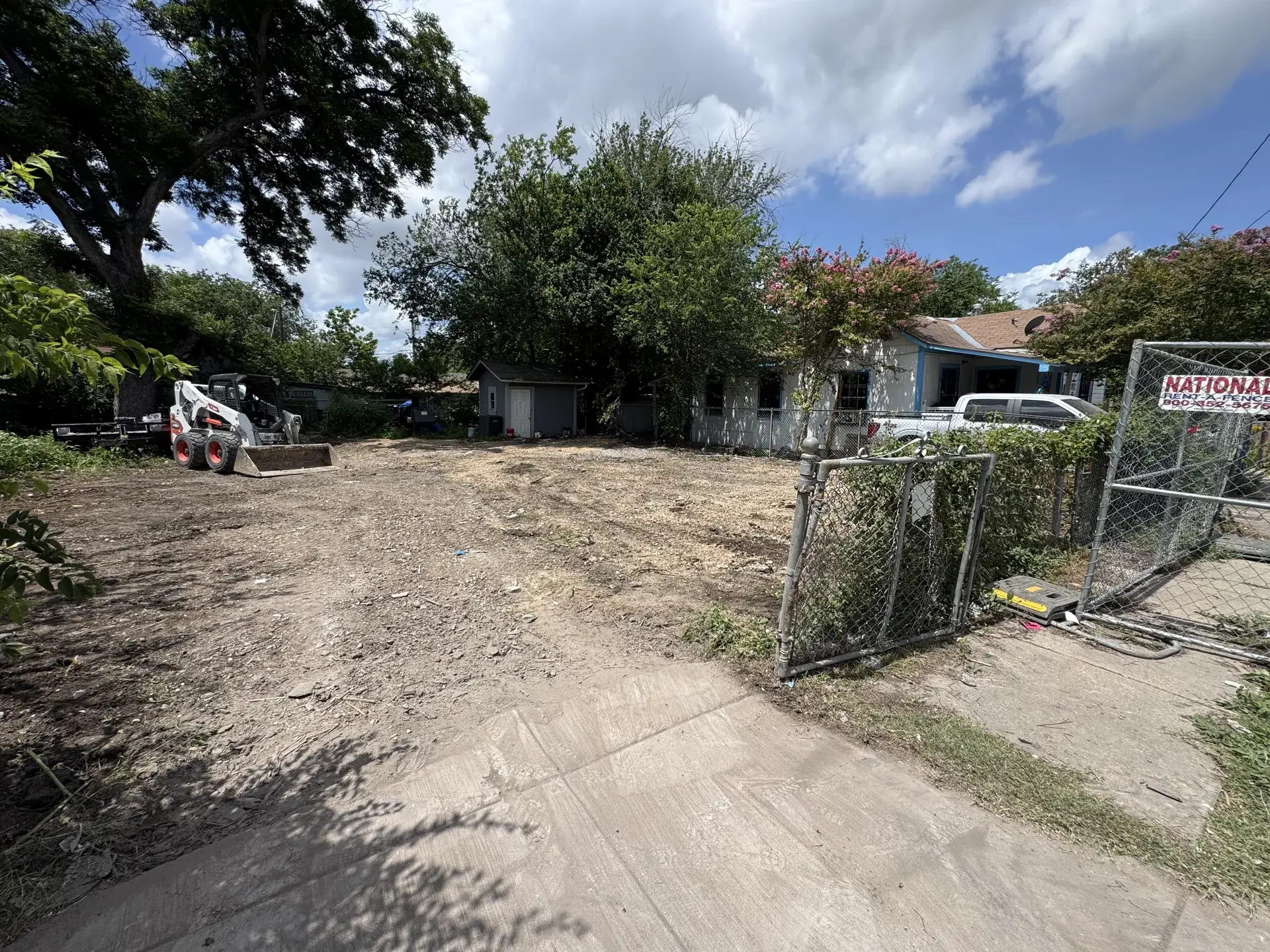
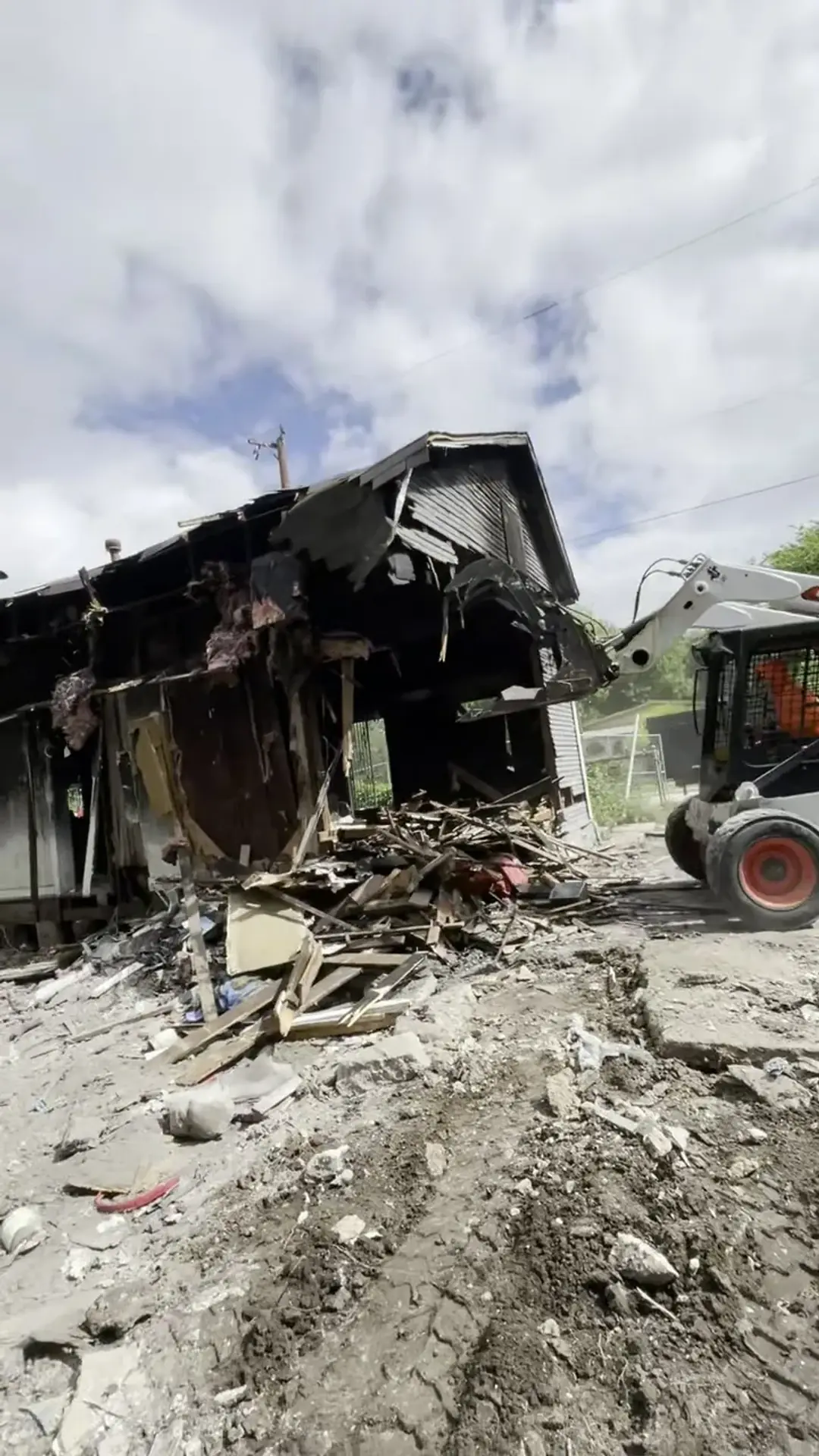
Demolition in San Antonio starts with paperwork, not machinery. Most building teardowns need a city demolition permit, and the permit will not issue until CPS Energy confirms electric and gas service is removed. A good demolition contractor plans those steps, takes the structure down safely, hauls the debris, and leaves a clean, level lot.
This guide walks through each stage the way we see it on San Antonio jobs: what has to happen before work starts, how the teardown and haul-off run, what affects the price, and what to ask before you hire anyone.
What a Demolition Contractor Handles
A demolition project is more than the time a skid steer spends knocking down walls. Contractor demolition covers the planning, the controlled teardown, separating and loading debris, hauling it to the right disposal sites, and cleaning up the property. Some companies only do the teardown and leave you to arrange a dumpster or a hauler. Others own the hauling equipment and finish the job in one pass.
Typical residential and light commercial demolition work includes:
- Houses, garages, and carports
- Sheds and outbuildings
- Interior demolition and gut-outs
- Small commercial buildings
- Concrete slabs, foundations, and pools
Before Demolition: Permits and Utilities in San Antonio
The City of San Antonio Development Services Department requires a demolition permit to remove an entire building, and each building needs its own application. The city's demolition bulletin, Information Bulletin 106, lists what goes with the application, including a site plan and a 6-foot security fence around the work area for the length of the project.
Structures That Do Not Need a Demolition Permit
Not every removal needs a demolition permit. The bulletin exempts fences, decks, sidewalks and driveways, above-ground pools, and detached sheds or similar accessory structures under 300 square feet. Taking out an old driveway or a small storage shed is usually a simpler project than removing a house, and it often pairs with concrete removal.
Utility Disconnects Come First
When a demolition application is submitted, CPS Energy is asked to confirm that electric and gas service to the structure has been removed. The city cannot issue the permit until CPS Energy signs off, and the bulletin warns that a service removal work order can take 30 to 45 business days. On most residential jobs, this is the step that sets the schedule.
Older and Historic Buildings
San Antonio has deconstruction requirements for older homes. Under the bulletin, residential structures of up to eight units, along with rear accessory buildings like garages and carriage houses, fall under deconstruction rules if they were built on or before December 31, 1945 inside city limits, or on or before December 31, 1960 and are historic or in a Neighborhood Conservation District. The Office of Historic Preservation reviews every demolition application, and that review can take up to a month.
Asbestos and State Notification
For commercial buildings, the city requires a site-specific asbestos survey before it will issue a demolition permit. The Texas Department of State Health Services also requires notification at least 10 working days before demolition of a building or facility, even when no asbestos is present. A single private residence is not subject to that notification. If a survey finds asbestos, a licensed abatement contractor removes it before demolition begins.
How a Demolition Project Runs
- Site evaluation. We walk the property, review the scope, check equipment access, and note anything that affects the work, such as trees to protect, nearby structures, or buried lines.
- Written estimate and planning. You get a written estimate based on the actual conditions of the site and the work required.
- Preparation. Permits, utility disconnects, inspections, and the security fence are handled or confirmed before any equipment moves.
- Demolition and removal. The structure comes down, debris is sorted and loaded, and loads leave the property as the work progresses.
- Cleanup. The lot is cleared and left level, ready for the next phase of the project.
When the job includes pulling footings, a foundation, or anything else below grade, Texas law requires a locate request through Texas 811 at least two business days before digging, not counting weekends and holidays. Utility owners mark their lines so nothing buried gets hit.
What Happens to the Debris
Demolition produces heavy, mixed material: lumber, roofing, drywall, concrete, brick, and metal. Separating it as it comes down matters, because different materials go to different places. Concrete and masonry are handled apart from mixed construction debris, and metal can be recycled.
Because we run our own dump truck and skid steer, debris removal is part of the same job rather than a second contractor to schedule. Loads leave the site as the work progresses, so debris does not sit on the lot for days. See our hauling and debris removal service for loads that are not part of a demolition.
Planning for What Comes After
Think about the next phase before the building comes down. If you plan to rebuild, decide whether the slab and footings should come out or stay for your builder to evaluate, and whether the lot will need fill or base material afterward. If the lot will sit empty for a while, agree on how it will be left: graded smooth, with the driveway apron intact, or cleared to the property lines. Settling those details at the estimate keeps the final walk-through simple and avoids paying for a second trip later.
What Affects the Cost of Demolition
Every demolition is priced on site. The main factors are:
- The size and type of structure
- Building materials, such as brick, block, or a concrete slab
- Site access for equipment and trucks
- The amount of debris and its disposal requirements
- Permits, utility disconnects, and any historic or asbestos requirements
- Whether a slab, pool, or foundation also comes out
That is why we provide a free on-site estimate rather than quoting a demolition over the phone. Two houses of the same size can price very differently once access, materials, and debris are accounted for.
Questions to Ask Before You Hire a Demolition Contractor
- Who applies for the demolition permit, and who requests the CPS Energy disconnect?
- Is debris hauling included, or will I need a separate hauler or dumpster?
- How are slabs, foundations, and driveways handled?
- What will the lot look like when you finish?
- Is the estimate in writing, and what could change it?
Clear answers to these questions tell you whether a contractor will manage the whole project or leave pieces of it to you. For more on how we handle demolition from start to finish, visit our demolition services page.
Planning a Demolition in San Antonio?
A smooth demolition comes down to planning: the right permit, utilities disconnected early, a plan for older or historic structures, and debris that leaves with the crew. Five Star Trucking handles residential and light commercial demolition across San Antonio and surrounding areas, from the first site visit through final cleanup. Call (830) 410-7554 or request a free on-site estimate to talk through your project.
Frequently Asked Questions
How Long Does Demolition Take in San Antonio?
The teardown itself is often the shortest part. Permit review, the CPS Energy disconnect, and any historic review usually set the schedule, and the city notes the utility work order alone can take 30 to 45 business days. We give you a timeline after the site visit.
Do I Need a Permit to Demolish a Shed in San Antonio?
Usually not, if the shed is detached and under 300 square feet. The city's demolition bulletin exempts fences, decks, sidewalks, driveways, above-ground pools, and small accessory structures. Larger buildings need a demolition permit, and each building needs its own application.
What Is Deconstruction?
Deconstruction is taking a building apart by hand so materials can be salvaged. In San Antonio it applies to many residential structures built on or before 1945, and to some historic buildings built through 1960. The Office of Historic Preservation reviews these applications.
Does Demolition Include Debris Removal?
It depends on the contractor. Some only handle the teardown and leave the debris for you to arrange. Five Star Trucking hauls the debris with our own dump truck as part of the job and leaves the lot clean and level.